Culino Kitchen
Culino Kitchen
Culino Kitchen
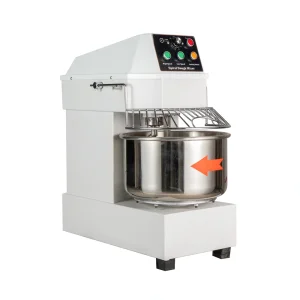
Discover our primary heavy-duty flour mixing solutions engineered to support high hydration ratios, rapid gluten structure formation, and long-term mechanical reliability under demanding production schedules.
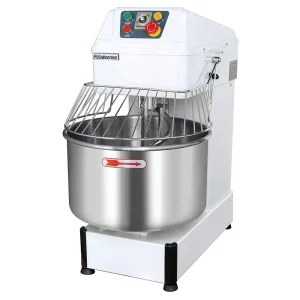
The industrial landscape in Venezuela is undergoing a significant transformation. Food processing, particularly the milling of wheat flour and the production of staple baked goods, remains a cornerstone of the nation’s domestic manufacturing sector. Historically dependent on direct imports of finished food products, modern Venezuelan entrepreneurs and long-standing food manufacturers are actively investing in local production capabilities to increase self-sufficiency. This industrial shift has spurred a massive demand for reliable, high-yield commercial machinery, where Industrial Spiral Mixers act as the primary engines of large-scale dough preparation.
From the bustling artisan bakeries (panaderías) in Caracas and Valencia to the massive pasta and bread manufacturing plants in the central regions of Aragua and Carabobo, the need for continuous machinery uptime is critical. Operating in this environment requires equipment that can handle varied wheat flour qualities, maintain structural durability despite occasional logistical delays in spare parts supply, and deliver consistent rheological outcomes. As a leading manufacturer, Foshan Culino Kitchen Co., Ltd. has optimized its machinery exports to directly address these local operational challenges.
In the global arena of food machinery manufacturing, China, and specifically the industrial hubs of Guangdong Province like Foshan, stands at the absolute forefront. Foshan Culino Kitchen Co., Ltd. leverages this advanced ecosystem to produce commercial dough mixers and ribbon blenders that offer an unparalleled balance of cost-efficiency and premium engineering. Our manufacturing facilities utilize CNC laser cutting, automated robotic welding, and dynamic balancing test rigs to ensure that every spiral hook and mixing bowl performs flawlessly under high torsional stress.
Exporting to South America, and specifically to Venezuela, requires a deep understanding of maritime shipping channels and port logistics. By cooperating with major global carriers, we coordinate shipments from Shenzhen and Nansha ports directly to Puerto Cabello and La Guaira. This structured logistics network ensures predictable transit times, minimized handling risks, and complete documentation, allowing local businesses in Venezuela to procure state-of-the-art machinery without administrative friction.
Extensive experience shipping to Latin American markets, fully complying with regional standards, customs frameworks, and bills of lading requirements.
Built with heavy steel frames and dual-motor structures that separate bowl rotation from hook movement, preventing mechanical fatigue.
All machinery features CE certification, meeting rigorous European standards for electrical safety, hygiene design, and structural durability.
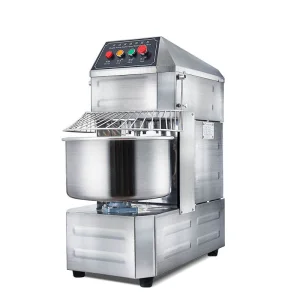
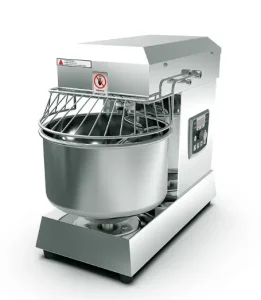
From a bakery science and dough rheology perspective, the selection of the mixing tool directly dictates the quality of the final baked product. The spiral mixer is uniquely designed for bread, pizza, and high-hydration doughs. Unlike planetary mixers, where the mixing tool moves in an orbital path while the bowl remains stationary, a spiral mixer rotates the bowl simultaneously with the rotation of the spiral hook. This dual-motion design provides critical technical advantages:
During gluten development, excessive heat can prematurely activate yeast, causing the dough to rise too early and compromising the structure of the crumb. Our spiral mixers are engineered to minimize frictional energy dissipation. The synchronized rotation of the hook and the bowl gently folds the dough instead of stretching and tearing it, keeping the dough temperature within the optimal range of 22°C to 26°C, even in the tropical ambient conditions of Venezuela.
Flour particles require even contact with water to hydrate the gliadin and glutenin proteins. The guide bar (breaker bar) inside our stainless steel mixing bowls divides the dough mass, allowing the spiral hook to knead the mixture at a molecular level. This leads to maximum water absorption (up to 80% hydration levels), increasing overall yield per batch and giving breads like pan de jamón and crusty baguettes superior volume and crumb elasticity.
By dividing the mechanical work between two distinct motors—one dedicated to the bowl drive and the other to the helical spiral hook—we drastically reduce the torque load on the transmission gears. This dual-motor layout increases the lifespan of the drive belts and chains, making our industrial mixers much more reliable than single-motor machines when processing stiff, low-moisture doughs.
We also manufacture specialized mixers for agricultural grain coating and retail baking operations, ensuring high homogeneity across diverse industry sectors in Venezuela.
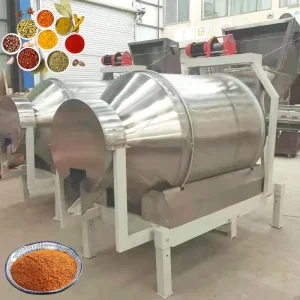
Our comprehensive catalog of mixers and ribbon blenders is engineered to support a diverse set of local industries throughout Venezuela, ensuring specialized performance based on production requirements:
Whether in Caracas, Barquisimeto, or Maracay, bakeries operate on thin margins and tight schedules. The demand for daily pan sobado, sandwich bread, French baguettes, and sweet buns requires mixers that can run constantly. Our Commercial Food Mixer Double Speed Spiral Dough Mixers are optimized to perform double rotation kneading, reducing total mix times by up to 35% and guaranteeing structural consistency.
In the agricultural heartlands of Portuguesa and Barinas, seed processing plants use our High Efficient Drum Type Seed Coating Machines and Spiral Roller Agitators. These machines provide a uniform layer of chemical protectants and nutrients around grains, maximizing germination rates without damaging the fragile outer seed coat.
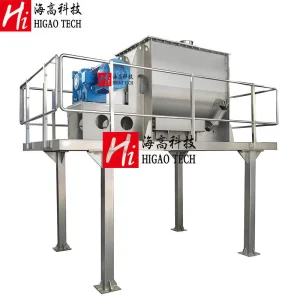
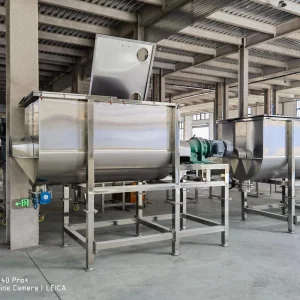
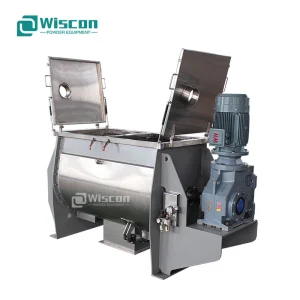
For manufacturers producing drink mixes, milk powders, cocoa mixtures, spices, and industrial chemical powders, our Industrial Horizontal Double Spiral Ribbon Blenders (ranging from 300kg to 500kg capacities) provide high-shear blending. The outer ribbon moves materials from the edges to the center, while the inner ribbon pushes materials to the outside, creating a fluid, homogeneous mix in minutes.
Exporting heavy machinery to Venezuela demands more than just basic freight coordination. It requires specialized engineering to adapt to local electrical grid standards and specific operating parameters:
Venezuelan commercial properties and industrial parks operate primarily on 60Hz electrical systems, with voltages ranging from single-phase 120V/220V for retail bakeries to 3-phase 208V, 240V, or 480V for heavy industrial plants. High voltage fluctuations are common. To prevent motor burnouts, Foshan Culino Kitchen installs robust, heavy-duty contactors (Siemens or Schneider Electric) and thermal overload protection systems. Our machinery motors can be custom wound to matches the exact electrical signature of your Venezuelan facility.
To withstand ambient humidity and dust, all control panels and drive motor housings are sealed to IP55 standards, protecting internal electronics from flour dust ingress and water spray during cleanup routines. This prolongs component lifespan and minimizes downtime caused by electrical short circuits.
We supply complete packing lists, commercial invoices, certificates of origin, and technical manuals needed by Venezuelan customs (SENIAT) and quality assurance departments (SENCAMER). Every mixer is clearly labeled with the correct HS Code (typically 8438.10.10 for bakery machinery or 8479.82.00 for mixing and blending machinery) to streamline customs clearing at Puerto Cabello or La Guaira.
Foshan Culino Kitchen Co., Ltd. continuously invests in research and development to align our mixers with the requirements of Industry 4.0. Our upcoming engineering roadmap is centered on three core elements:
By implementing VFD technology, future generations of our spiral mixers will offer infinite speed adjustment, allowing operators to fine-tune energy input based on real-time dough resistance. This will reduce energy consumption by up to 25%, helping Venezuelan plants mitigate high electricity costs and reduce stress on backup generator systems during grid outages.
Future control panels will integrate infrared temperature sensors directed into the center of the mixing bowl. If dough temperature exceeds predefined thresholds, the controller will automatically transition the mixer to a lower speed or alert the operator, preventing batch spoilage.
We are transitioning to touch-sensitive PLC screens protected by high-impact resin plates. These interfaces will support programmable recipes, allowing bakery managers to lock in specific mix durations and speeds for different flour batches, ensuring uniform production quality regardless of operator skill level.
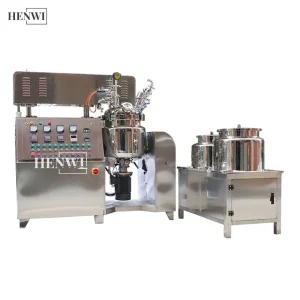
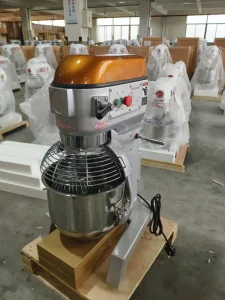
Browse our full range of heavy-duty horizontal ribbon blenders, vacuum homogenizers, double-motion planetary mixers, and high-speed dough kneaders built for export to Venezuela.