Culino Kitchen
Culino Kitchen
Culino Kitchen
Engineered for large-scale operations, commissary kitchens, and industrial food manufacturing plants.
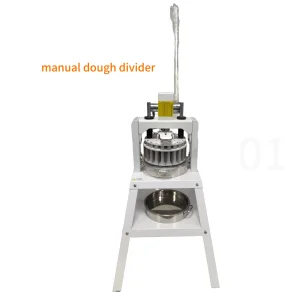
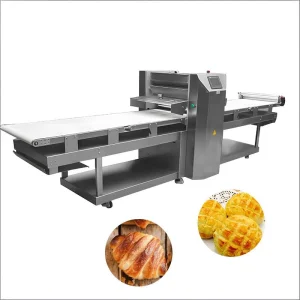
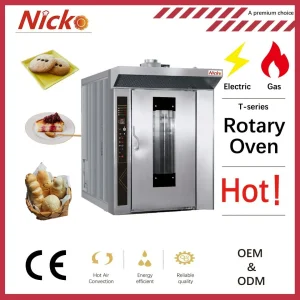
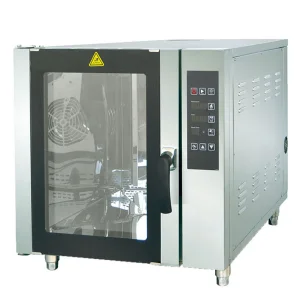
In the modern commercial baking landscape, the transition from decentralized, small-scale artisan shops to centralized, high-throughput manufacturing plants is driven by technology. Industrial ovens stand at the absolute center of this transformation. These thermal engineering systems are no longer simple enclosures with heat sources; they are complex thermodynamic ecosystems designed to control moisture content, aerodynamic circulation, heat-transfer pathways, and conveyor synchronization. When deploying solutions across regions, major industrial bakeries must balance throughput consistency with energy expenditures, regulatory requirements, and raw material variations.
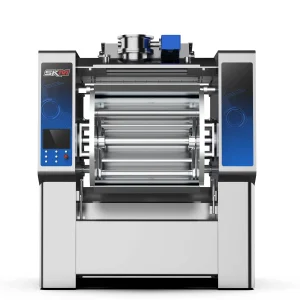
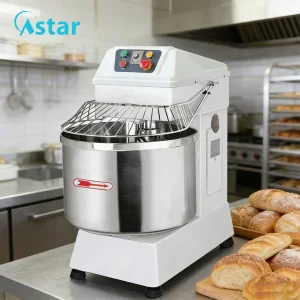
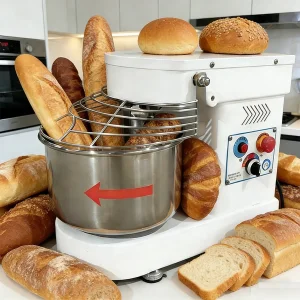
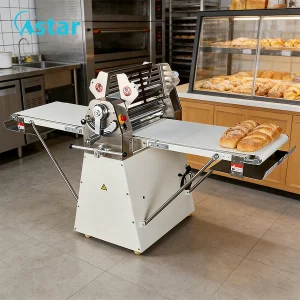
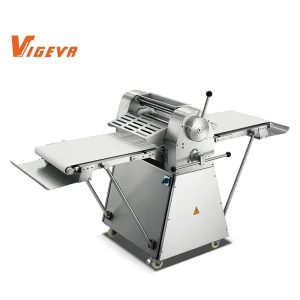
To establish a highly profitable industrial bakery production line, engineering directors must examine the synergy between preparation equipment and baking chambers. For instance, incorporating a Vertical High Efficiency Cooking Machine Planetary Mixer ensures that grease or highly viscous dough matrices are uniformly blended at molecular levels, preventing thermal hot spots or structural collapsing during the baking phase in rotary rack ovens. Similarly, precise dough laminating via an Automatic Dough Pastry Sheeter is rendered useless if the subsequent convection oven lacks multi-zone steam injection systems to accurately set the crust. A unified system-wide solution architecture is essential to achieve a standard product output across multiple shifts.
Industrial baking solutions require holistic engineering. Designing production lines with matched capacities between pre-bake preparation (mixing, sheeting, dividing) and the thermal profile of multi-deck or rotary rack systems minimizes idle periods, lowers energy waste by up to 22%, and maintains the internal structural integrity of complex crumb networks.
Dual-directional air cycling eliminates static boundary layers around dough, guaranteeing uniform crust colorization and hydration retention across all deck racks.
Integrated PLCs adjust heat curves based on recipe profiles, tracking parameters down to 0.5 degrees Celsius for unmatched precision.
Premium refractory materials and ceramic compounds store and distribute heat evenly, protecting elements from rapid thermal fluctuations.
Analysis of the planetary shifting demands in heat generation, fuel compliance, and automated food lines.
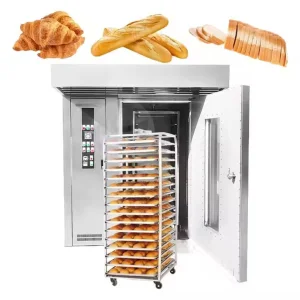
The global commercial baking machinery market is witnessing a severe technological pivot due to fluctuating energy costs and evolving environmental directives. In Europe and North America, strict decarbonization policies push operations toward electric and hybrid multi-deck conveyor setups. Conversely, in regions with vast, highly cost-effective gas infrastructure or unstable electrical grids, dual-fuel burners utilizing liquefied petroleum gas (LPG) or diesel continue to dominate. Large manufacturing groups look for versatile layouts, like our Electric/Gas/Diesel Rotary Rack Bread Oven (32 Trays), which can be adapted to regional energy grids without modifying core baking parameters.
Furthermore, automation has graduated from a luxury to an operational survival mechanism. Severe labor shortages in Western markets have driven the demand for high-capacity proofing cabinets and automated dough sheeters. Modern commercial facilities operate on tight timelines: dough must be precisely mixed in vertical spiral mixers, sheeted, partitioned, proofed in temperature-controlled rooms, and baked with minimal human contact. This reduces biological contamination risks and stabilizes unit production costs, giving high-capacity facilities a critical edge in the global retail supply chain.
To master the design of commercial ovens, one must understand how heat transfer mechanics affect the physical structure of baking dough. Heat transfer is categorized into conduction, convection, and radiation. In a conveyor deck oven, conduction plays a primary role as the bottom of the dough makes direct contact with ceramic or stone slabs. Convection, the transfer of heat via moving air, is dominant in rotary rack and convection ovens. Radiation from inner metal walls completes the heat transfer matrix. Balancing these three forces determines the crumb development, expansion rate, and moisture gradient of the baked goods.
Equally critical is steam management. When dough first enters a baking chamber, it undergoes "oven spring"—a rapid expansion of carbon dioxide and water vapor within the gluten matrix. If the outer surface of the dough dries out too quickly, it forms a premature crust that constrains this expansion, resulting in dense, fractured bread. Introducing superheated steam during the initial stage forms a thin condensation film on the dough. This keeps the outer layer elastic, allowing the dough to expand to its maximum volume. Furthermore, the steam gelatinizes surface starches, which dry out to form a glossy, thin, and crisp crust rather than a thick, leathery shell.
Aligning thermal machinery with regional safety, emission, and electrical grid requirements.
Operating a global bakery equipment supply line requires compliance with regional safety frameworks. Equipment entering the European Economic Area must carry CE marking, certifying adherence to strict machinery, electrical, and gas safety standards. In North America, UL, CSA, and NSF certifications are essential to confirm the equipment is safe for use in commercial kitchens. This is why Foshan Culino Kitchen Co., Ltd. builds products with customizable component options, allowing us to install certified burners, safety valves, and electrical lines tailored to local requirements.
Beyond certifications, physical installations require localization. Standard electrical systems vary worldwide, from 380V/50Hz three-phase configurations in Europe and Asia to 220V or 480V/60Hz configurations in the United States and Canada. Gas pressure standards also differ, requiring adjustable gas manifold valves. Our technical team works closely with local engineering partners, providing detailed schematics, step-by-step commissioning checklists, and remote video support to ensure seamless integration on the factory floor.
Based in Foshan, Guangdong Province—a leading manufacturing hub in China—Foshan Culino Kitchen Co., Ltd. operates advanced production facilities. We feature modern assembly lines, dedicated research and development centers, and strict quality control teams. We specialize in high-quality commercial cooking tools, commercial kitchenware, and industrial food preparation machines.
Our focus on durable, efficient, and user-friendly products makes us a trusted partner for commercial bakeries, central kitchens, and food service distributors worldwide. We provide complete support from initial design and development through to international logistics and after-sales service.
Baking demands vary greatly by product type, production volume, and local market preferences. A pastry manufacturer producing delicate puff pastries needs different machinery than a commissary kitchen producing thousands of sandwich loaves daily. Below are three primary application scenarios:
Primary Goal: Continuous operation, high yield, and extreme product consistency.
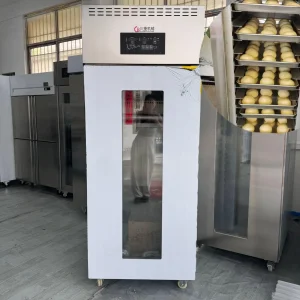
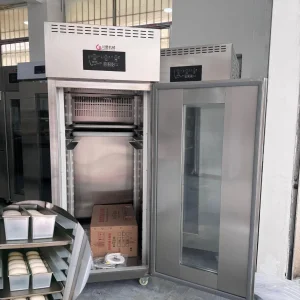
The Solution: The 32-Tray Rotary Rack Oven paired with 36-Tray Fully Automatic Intelligent Proofing Cabinets. This setup supports a continuous rotation workflow: while one rack is baking, the second rack is proofing under controlled temperature and humidity, and a third rack is loaded with freshly portioned dough from the Automatic Dough Divider. This maintains a steady, efficient production cycle.
Primary Goal: Fast turnaround times, diverse menu capabilities, and space-saving designs.
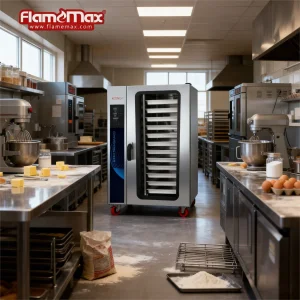
The Solution: Medium-sized Hot Air Convection Ovens with Steam Systems. Convection baking allows quick preheating and fast baking times, ideal for baguettes, croissants, and breakfast rolls. Combining these with space-saving, table-type folding dough sheeters allows kitchens to optimize limited floor space while maintaining a high output.
Primary Goal: Consistent speed, flat baking profile, and continuous output.
The Solution: Automated conveyor belt ovens. These continuous tunnel systems use high-intensity ceramic heating elements or direct gas burners to bake flatbreads, pizzas, and cookies in minutes, delivering a consistent bake and texture across every batch.
How AI, green energy, and thermodynamics are shaping the next generation of industrial ovens.
The next decade of industrial baking equipment design is defined by digital integration and energy conservation. The traditional thermal sensor is being replaced by multisoint infrared thermography systems that map dough surface temperatures in real time. Future PLC controllers will use machine learning algorithms to adjust heat settings dynamically. If a batch of dough enters the chamber with slightly higher water content than normal, the oven will automatically adjust fan speeds and humidity exhaust to deliver the target crust texture without human intervention.
Additionally, sustainable fuel sources are becoming standard. Manufacturers are developing hydrogen-ready gas burners and high-intensity electric elements that can draw power from renewable sources like solar arrays. High-efficiency waste heat recovery units capture thermal exhaust from the baking process and reuse it to preheat incoming combustion air or power adjacent proofing cabinets. These innovations help industrial bakeries cut operating costs while meeting strict environmental standards.
At Foshan Culino Kitchen Co., Ltd., we combine practical manufacturing experience with engineering innovation. Every product we build undergoes rigorous quality control checks under simulated factory conditions before shipment. We are dedicated to providing global bakeries with reliable, energy-efficient, and high-performance equipment that drives long-term business growth.
Answers to key engineering, regulatory, and purchasing questions from industrial food operations.
Direct-Fired Gas Ovens: In these systems, the combustion gases enter the baking chamber directly and make contact with the products. This design provides fast heat-up times and high thermal efficiency, making it ideal for pizzas, flatbreads, and certain cookies where fast, direct heat is required.
Indirect-Fired Gas Ovens: These systems channel combustion gases through a heat exchanger, keeping them separate from the baking chamber air. This approach prevents fuel byproducts from affecting delicate flavors and ensures gentler, highly consistent heat transfer, which is preferred for delicate pastries, sponge cakes, and high-quality artisan breads.
During the initial baking phase, injecting steam into the oven chamber condenses onto the cool dough surface. This moisture transfers heat rapidly, allowing the starches on the dough surface to gelatinize. This process creates an elastic skin that supports clean oven spring and expansion.
As baking continues, this gelatinized starch layer dries out into a thin, glass-like crust with a deep golden shine. Without adequate steam, the dough surface dries too quickly, leading to cracks, uneven shapes, and a thick, tough crust.
The choice depends primarily on your local energy infrastructure, fuel costs, and environmental regulations:
Proofing requires precise control of temperature and relative humidity to manage yeast activity. Yeast thrives in warm, humid conditions. If the proofing cabinet temperature is too low, fermentation slows down, extending production times.
If the temperature is too high, the yeast can over-ferment, weakening the gluten structure and causing the bread to collapse in the oven. Additionally, maintaining relative humidity between 75% and 85% prevents the dough surface from drying out and forming a "skin," which would restrict expansion during baking.
To prevent uneven baking across racks, operators should follow a regular maintenance schedule:
We provide comprehensive support for our international clients. This includes custom voltage and gas configurations during manufacturing to match local grid standards. We also offer detailed technical documentation, video installation guides, and direct support from our engineering team during commissioning.
Furthermore, we maintain an inventory of key replacement parts and work with regional service partners to ensure reliable after-sales support and minimal downtime for your operations.
Robust dough preparation machines designed to complement high-capacity commercial baking ovens.