Culino Kitchen Culino Kitchen

China Top 10 How to Maintain Slicing and Cutting Equipment?

Time:2026-10-20 Author:Madeline
0%

Slicing and cutting equipment sits at a critical point in food production. A blunt blade can crush vegetables, tear meat, and increase product waste. Poor alignment can also create uneven portions, vibration, and unnecessary downtime. This is why manufacturers need a practical answer to “how to maintain slicing and cutting equipment.”

The Food and Agriculture Organization reported that approximately 14% of global food production is lost between harvest and retail. Equipment-related damage is not the only cause, but accurate cutting can help reduce avoidable losses. PMMI industry research also identifies automation, labor shortages, and equipment reliability as continuing priorities for food processors. These findings make preventive maintenance more valuable than emergency repair.

Small details matter. Operators should inspect blades, guards, belts, bearings, sensors, and product-contact surfaces during every planned check. A thin film of residue around a shaft may indicate incomplete cleaning or a developing seal problem. Unusual noise deserves attention, even when production continues normally. Maintenance records should include blade changes, lubrication, calibration, sanitation results, and recurring faults.

This guide presents ten practical methods for maintaining slicing and cutting equipment in China and other processing environments. It considers manufacturer instructions, HACCP-based hygiene controls, workplace safety, and ISO 55000 asset-management principles. No checklist is perfect. Actual wear depends on product hardness, moisture, operating speed, cleaning chemicals, and operator habits. Therefore, teams should review their results and adjust schedules using real inspection data, not assumptions. Consistent care protects product quality, worker safety, equipment life, and long-term operating costs.

China Top 10 How to Maintain Slicing and Cutting Equipment?

Understanding Slicing and Cutting Equipment Maintenance Requirements

Slicing and cutting equipment needs maintenance based on workload, material, and operating conditions.

A machine processing chilled meat faces different stresses from one cutting vegetables or packaging materials. Operators should inspect blades, guards, belts, bearings, and adjustment points before each shift. Look for loose fasteners, unusual vibration, metal dust, and uneven cuts. Small changes often appear before a serious failure.

Cleaning requirements must match the equipment’s construction and working environment.

Remove residue from blade housings, conveyors, and collection areas after production. Use approved cleaning agents, controlled water pressure, and fully dry surfaces before reassembly.

Moisture trapped near electrical parts can create hidden damage. Lubricate only the points specified by the equipment manual. Excess lubricant may attract dust and contaminate nearby surfaces.

Blade condition deserves careful attention.

A dull blade increases motor load and can produce rough, unsafe cuts. Replace or sharpen it when cutting force rises, not only when damage becomes visible.

Record inspection dates, adjustments, replacement parts, and abnormal noises. This record supports reliable decisions and helps identify repeated problems.

A checklist is useful, but it is not perfect. Staff may overlook a gradual change during busy shifts. Short refresher training and periodic technical inspections can correct that weakness.

Cleaning and Sanitizing Equipment After Each Production Cycle

Cleaning and sanitizing slicing and cutting equipment after every production cycle protects product quality and worker safety. CDC estimates that foodborne illnesses affect about 48 million people in the United States each year. Residue trapped under blades, guards, and conveyor joints can support microbial growth. A short cleaning delay may create a serious contamination risk.

Operators should stop the machine, isolate its power, and remove visible food particles. Disassemble blades, guides, rollers, and removable covers according to the equipment manual. Wash surfaces with approved detergent, rinse with potable water, then apply sanitizer at the required concentration and contact time. Allow parts to air-dry before reassembly. The FDA Food Code 2022 generally requires food-contact surfaces handling temperature-controlled foods to be cleaned at least every four hours. Cleaning after each cycle provides stronger control, especially with sticky proteins or high-moisture products.

Tips: Use a color-coded brush for each area. Check hidden joints with a flashlight. Verify sanitizer concentration with test strips. ATP testing can reveal organic residue, but it cannot prove that pathogens are absent. Keep records of cleaning time, chemical concentration, temperature, and the employee responsible. USDA FSIS sanitation guidance also emphasizes documented procedures and routine verification. One practical weakness remains common: teams may inspect visible surfaces while ignoring the underside of cutting tables. That gap deserves review.

Inspecting and Maintaining Blades, Guards, and Moving Components

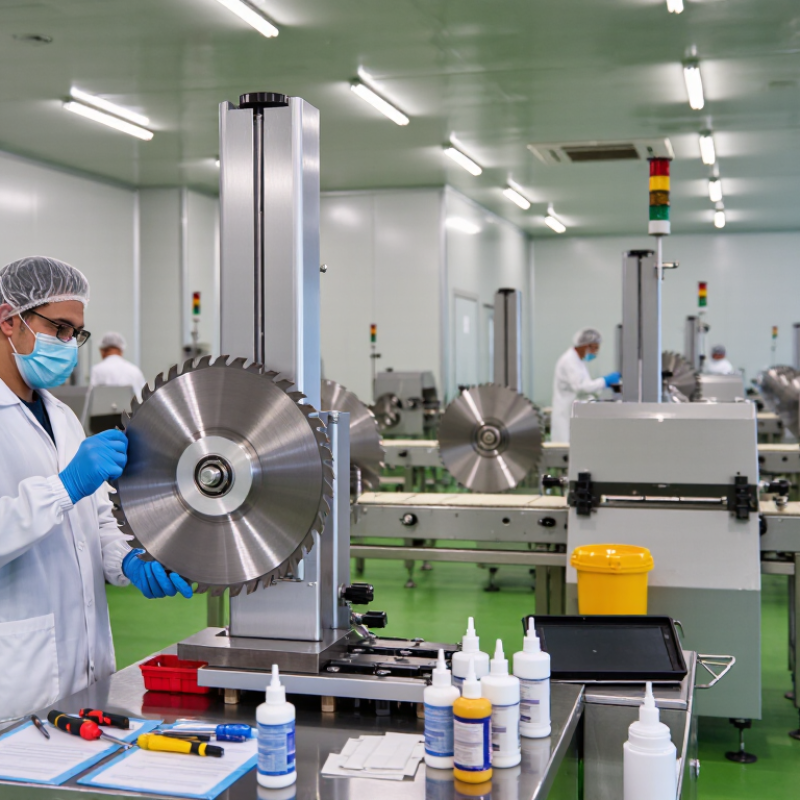
Slicing and cutting equipment demands disciplined inspection, especially around blades, guards, and moving components. A sharp blade is not automatically a safe blade. Technicians should check for cracks, chipped edges, corrosion, and uneven wear before every shift. Even a small defect can increase vibration, product damage, and hand exposure.

Guards must remain firmly attached and correctly positioned. Test interlocks without bypassing them. The machine should stop when access doors open or protective devices activate. OSHA’s machine-guarding requirements, including 29 CFR 1910.212, emphasize protection from rotating parts, nip points, and flying materials.

HSE reported 138 worker fatalities in Great Britain during 2023/24, showing why basic controls still matter.

Moving components require closer observation than a quick visual check. Inspect belts, chains, shafts, bearings, and couplings for looseness, heat, unusual noise, or grease leakage. Apply lubrication only as specified in the equipment manual.

Lockout and tagout must control stored energy before hands enter the cutting area. Record blade thickness, guard tests, vibration readings, and corrective actions. Small details matter.

Maintenance teams sometimes rely too heavily on routine. That is a weakness. A missed loose fastener can become a serious failure. Review inspection intervals after jams, product changes, or abnormal vibration. Stop the machine when findings are unclear. Five quiet minutes can prevent a costly incident.

Lubricating, Calibrating, and Testing Equipment for Accuracy

Accurate slicing depends on three controls: lubrication, calibration, and testing. The U.S. Department of Energy’s Operations & Maintenance Best Practices Guide reports that preventive maintenance can reduce costs by 12–18% compared with reactive work. For cutting equipment, apply the correct food-grade lubricant only to approved points. Excess oil can attract dust, stain products, and hide early wear. Wipe the blade shaft and guide rails before lubrication. A clean surface matters.

Calibration should follow the equipment manual and a documented schedule. Check blade angle, cutting thickness, conveyor speed, and sensor response. Use certified gauges where possible. ISO 10012 emphasizes controlled measurement processes and traceable calibration. Test a small sample after every adjustment. Measure thickness at several positions, not just the center. Small differences can become large production losses. I have seen operators trust the display too quickly.

Tips: Keep a simple maintenance log. Record date, lubricant type, gauge result, and operator initials. Inspect unusual vibration, heat, or uneven edges immediately. Stop and investigate. Do not keep adjusting a machine that has not been cleaned. Review calibration intervals after repeated failures; the original schedule may be wrong for your workload. Test guards and emergency stops during planned maintenance, following site procedures and applicable safety requirements.

How to Maintain Slicing and Cutting Equipment?

This baseline maintenance schedule shows common intervals used for slicing and cutting equipment: cleaning and blade-condition checks are typically performed daily, lubrication about weekly, and calibration and safety-function testing about monthly. Always adjust the schedule according to operating hours, material conditions, and the equipment manufacturer’s instructions.

Establishing Preventive Maintenance Schedules and Safety Records

A reliable maintenance program begins with a written schedule for every slicing and cutting machine. Record blade checks, guard inspections, lubrication, alignment, and electrical tests. Daily operators can complete quick visual checks before production begins. Look for loose fasteners, unusual vibration, damaged cables, or material buildup. Small signs matter.

Use a weekly checklist for cleaning, blade condition, emergency stops, and sensor operation. Schedule deeper inspections monthly or after a fixed number of operating hours. Maintenance staff should record the date, machine identification, findings, corrective action, and responsible technician. Keep these records where operators can access them easily. Paper forms work, but clear digital records improve tracking.

Safety records should include training dates, inspection results, reported faults, and follow-up verification. A machine should not return to service until the repair is confirmed. In practice, rushed production can weaken this rule. Our early schedules were too optimistic, and several inspections were postponed during peak demand. That revealed a planning failure, not an operator failure. Adjust labor coverage, allow realistic downtime, and review overdue tasks every week. Supervisors should compare records with actual machine conditions. A clean form is not proof of safe equipment. The physical inspection must support every entry.

China Top 10 How to Maintain Slicing and Cutting Equipment? - Establishing Preventive Maintenance Schedules and Safety Records

No. Maintenance Area Recommended Frequency Preventive Maintenance Activities Safety Verification Record to Retain Priority Responsible Role
1 Blade and Cutting Edge Before each shift and after abnormal cutting Inspect the blade for cracks, chips, deformation, corrosion, and excessive wear. Replace damaged blades and confirm that the cutting edge is correctly seated and secured. Apply lockout and tagout before blade removal. Use cut-resistant gloves during handling and keep guards installed during operation. Blade inspection checklist, replacement date, blade identification, and technician signature Critical Operator and maintenance technician
2 Machine Guards and Interlocks Daily visual check; functional test weekly Check fixed guards, hinged covers, transparent shields, fasteners, and interlock switches. Confirm that the machine cannot operate when a required guard is open. Stop production immediately if an interlock fails. Never bypass, remove, or permanently defeat a guard or safety switch. Guard and interlock test record, defect report, and corrective-action closure Critical Shift supervisor
3 Emergency Stop System Daily visual check; function test monthly Inspect emergency-stop buttons, pull cords, reset controls, and warning labels. Verify that stopping the equipment removes the hazardous motion and that a manual reset is required. Test only under controlled conditions with the cutting zone clear. Do not use the emergency stop as a routine operating control. Emergency-stop test log, test result, date, and authorized tester Critical Electrical maintenance technician
4 Drive Belts, Chains, and Couplings Weekly inspection; detailed check monthly Inspect tension, alignment, wear, lubrication condition, loose fasteners, and abnormal vibration. Adjust or replace components according to the equipment manual. Isolate electrical and pneumatic energy before reaching into the drive area. Install all transmission covers before restart. Drive inspection sheet, tension or alignment measurement, and parts replacement record High Mechanical maintenance technician
5 Bearings and Lubrication Points Daily condition check; lubrication according to service interval Monitor noise, temperature, vibration, grease condition, and leakage. Apply only the specified lubricant and avoid over-lubrication that may contaminate products or damage seals. Keep hands away from moving parts during condition checks. Clean spills promptly to prevent slips and product contamination. Lubrication register, lubricant type, quantity, date, and abnormal-condition notes High Maintenance technician
6 Conveyor, Feed Table, and Product Guides Daily cleaning and inspection; alignment check weekly Remove product residue, inspect belts and rollers, check guide alignment, and verify that feed components move smoothly without trapping or crushing hazards. Use isolation procedures before cleaning near nip points. Keep loose clothing, jewelry, and hands away from in-running areas. Cleaning record, alignment check, belt condition, and corrective-action details High Operator and sanitation team
7 Electrical Controls and Sensors Visual check each shift; preventive test quarterly Inspect cables, connectors, control panels, proximity sensors, limit switches, and sensor alignment. Check for moisture, heat damage, loose terminals, or intermittent signals. Electrical work must be performed by a competent person. Verify isolation, discharge stored energy, and restore panel covers before energizing. Electrical inspection form, sensor test results, alarm history, and repair record Critical Qualified electrical technician
8 Pneumatic and Hydraulic Systems Daily leak check; detailed inspection monthly Inspect hoses, fittings, regulators, valves, pressure readings, and cylinders. Check for leaks, damaged tubing, unstable pressure, and unexpected movement. Release pneumatic or hydraulic pressure before servicing. Support raised or suspended components mechanically; do not rely on fluid pressure alone. Pressure reading log, leak inspection record, hose replacement date, and repair authorization High Mechanical maintenance technician
9 Cleaning, Sanitation, and Corrosion Control After each production cycle; deep inspection weekly Clean food-contact and non-product-contact surfaces using approved procedures. Dry exposed metal surfaces, inspect welds and joints, and remove corrosion before it affects hygiene or structural integrity. Disconnect and isolate the machine before wet cleaning. Protect electrical components and follow chemical handling and personal protective equipment requirements. Sanitation checklist, chemical-use record, corrosion findings, and release approval High Sanitation lead and production supervisor
10 Performance, Calibration, and Safety Review Performance review monthly; full preventive review quarterly Review cut thickness, product yield, vibration, noise, downtime, repeat failures, and safety incidents. Verify measuring devices and update the preventive maintenance schedule based on operating history. Confirm that corrective actions are closed before returning equipment to normal production. Conduct refresher training when procedures or hazards change. Monthly maintenance summary, calibration certificate, downtime analysis, training record, and management review Medium Maintenance manager and safety coordinator

FAQS

Why should slicing and cutting equipment be cleaned after every production cycle?

Food residue can remain under blades, guards, and conveyor joints. These damp areas may support microbial growth. Short delays increase contamination risk.

What steps should operators follow before cleaning the equipment?

Stop the machine and isolate its power. Remove visible food particles. Disassemble removable blades, guides, rollers, and covers according to the manual.

Which cleaning sequence is recommended?

Wash surfaces with approved detergent. Rinse with potable water. Apply sanitizer at the required concentration and contact time. Let parts air-dry before reassembly.

How can hidden residue be found?

Use a flashlight around joints and underneath cutting tables. Color-coded brushes can separate cleaning areas. Visible surfaces are not enough.

Can ATP testing prove that equipment is free from pathogens?

No. ATP testing can reveal organic residue, but it cannot prove pathogens are absent. Sanitation checks still require proper procedures and verification.

What cleaning records should a facility maintain?

Record the cleaning time, chemical concentration, temperature, and responsible employee. Keep records accessible. A complete form does not replace physical inspection.

How often should slicing equipment receive maintenance checks?

Operators should perform visual checks daily. Weekly checks can cover blades, guards, emergency stops, sensors, and buildup. Deeper inspections should occur monthly or after a fixed operating period.

What problems should operators look for before production?

Check for loose fasteners, unusual vibration, damaged cables, and material buildup. Small signs matter. Some issues may be missed during rushed checks.

What information belongs in safety and maintenance records?

Include inspection dates, machine identification, findings, corrective actions, training dates, and responsible technicians. Record follow-up verification before returning equipment to service.

How can maintenance schedules become more reliable?

Plan realistic downtime and adequate labor coverage. Review overdue tasks each week. We learned that optimistic schedules can fail during peak demand. That gap deserves review.

Conclusion

Proper maintenance is essential for keeping slicing and cutting equipment safe, accurate, and efficient throughout daily production. This guide explains how to maintain slicing and cutting equipment by first understanding its specific maintenance requirements and following a consistent cleaning and sanitizing routine after every production cycle. Removing food residue, moisture, and debris helps reduce contamination risks and supports reliable operation.

The article also covers regular inspection of blades, guards, fasteners, and moving components to identify wear or damage early. Proper lubrication, calibration, and performance testing help maintain cutting accuracy and reduce unnecessary strain on the machine. Finally, establishing a preventive maintenance schedule and keeping clear safety and service records can improve equipment reliability, extend its working life, and help operators respond quickly to potential problems.

Madeline

Madeline

Madeline is a dedicated marketing professional with a wealth of expertise in our company's core offerings. With a keen understanding of the industry, she brings a unique perspective to her role, consistently delivering high-quality content that highlights the superior aspects of our products. As......