Why automation is transforming bakery production is no longer a distant factory concept. It is visible in the steady rhythm of mixers, depositors, proofers, and ovens. Every morning, automated systems help bakeries produce thousands of loaves with consistent weight, shape, and bake color. Yet the change is not only about speed.
According to Erik Brynjolfsson, MIT economist and digital technology expert, “The right way to think about AI is as a complement to human intelligence, not a substitute.” This principle also applies to bakery automation. Skilled bakers still judge dough texture, aroma, fermentation, and product quality. Machines handle repetitive movements, precise dosing, temperature records, and production timing. People make the difficult decisions.
The strongest benefits are practical. Automation can reduce ingredient waste, improve worker safety, support cleaner processes, and maintain output during labor shortages. Sensors can identify temperature changes before a batch fails. Digital records can also help managers trace production problems more quickly. That matters when one uneven batch affects thousands of products.
Still, automation is not a perfect solution. Equipment requires investment, training, maintenance, and thoughtful workflow design. A poorly planned system may create expensive delays instead of removing them. Small bakeries may also struggle to justify full production lines. Human experience remains essential.
This article explores five reasons automation is transforming bakery production, while examining where technology helps most—and where careful judgment is still needed.
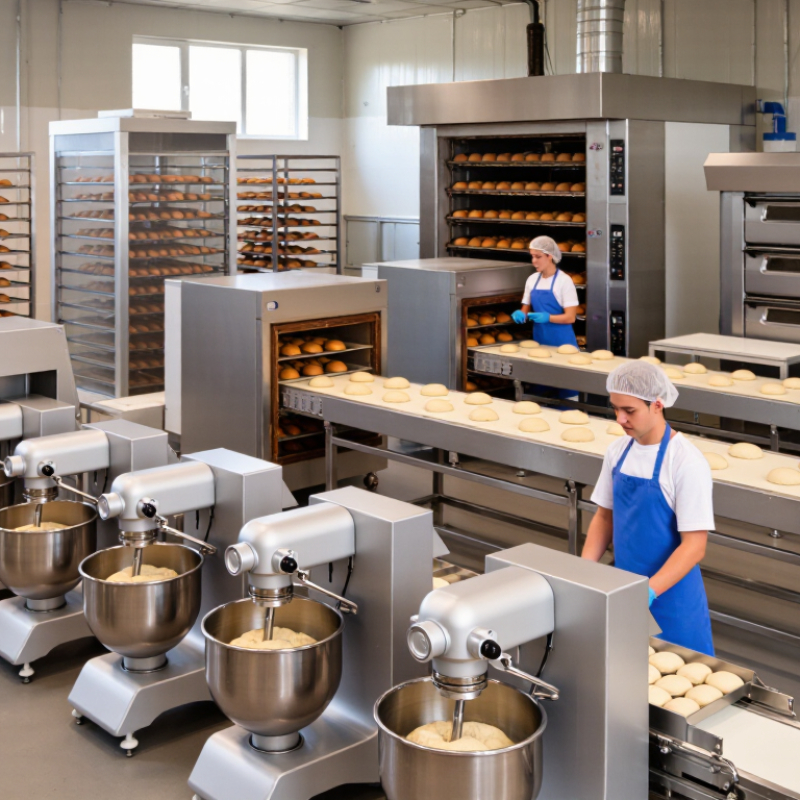
How Automation Is Reshaping Modern Bakery Production
How Automation Is Reshaping Modern Bakery Production
Automation is changing bakery production from mixing to packaging. Sensors monitor dough temperature, weight, and fermentation time with remarkable precision. This consistency helps teams produce loaves with similar texture and volume throughout each shift. Automated mixers also reduce physical strain during repetitive, demanding work. Workers can focus more on quality checks, recipe adjustments, and equipment care.
Production lines now respond faster to changing demand. Programmable systems can adjust baking temperatures, conveyor speeds, and portion sizes within controlled limits. Data records reveal waste patterns, energy use, and recurring faults. These details support better decisions than memory alone. Hygiene control also improves when fewer products require direct handling. Still, automation is not flawless. A poorly calibrated sensor may repeat the same mistake at high speed. Human judgment remains essential.
Tips: Train operators before increasing machine speed. Check calibration at scheduled intervals. Keep manual inspection in the process. Test a small production run first. Do not automate every task automatically. Some delicate pastries still need experienced hands, especially when appearance matters. Teams should compare production data with real product quality, because clean numbers can hide dry crusts, uneven color, or customer complaints.
5 Best Reasons Automation Is Transforming Bakery Production
| Reason |
Automation Area |
Operational Data Point |
Typical Production Benefit |
Why It Matters |
| 1. Higher Product Consistency |
Ingredient dosing, dough dividing and depositing |
Automated portioning commonly targets approximately ±1–2% weight variation, depending on product and equipment |
More uniform size, shape, bake time and package count |
Standardized portions improve yield control and reduce customer-visible variation |
| 2. Faster and More Predictable Throughput |
Conveyors, proofers, ovens, cooling systems and packaging lines |
Industrial bakery lines are commonly designed for continuous, repeatable flow rather than isolated manual batches |
Smoother production scheduling and fewer bottlenecks between process stages |
Balanced line speed helps production teams meet planned volumes with less queue time |
| 3. Better Process Control |
Temperature, humidity, mixing time and proofing control |
Typical yeast-dough proofing conditions are approximately 30–40°C with controlled relative humidity commonly around 75–85% |
More repeatable dough development, fermentation and crust formation |
Sensors and automated recipes reduce dependence on manual timing and visual judgment |
| 4. Lower Material Waste |
Recipe management, inline inspection and reject control |
Automated systems can monitor weight, dimensions, color and package presence at defined inspection points |
Earlier detection of underweight, misshapen, overbaked or incorrectly packed products |
Defects can be isolated before they affect an entire batch or downstream process |
| 5. Improved Safety and Traceability |
Robotic handling, digital records and automated quality checks |
Production data can record recipe version, batch time, process settings, inspection results and corrective actions |
Less manual contact with hot, repetitive or heavy tasks and faster root-cause analysis |
Digital records support food-safety verification, recall readiness and continuous improvement |
Note: Operating ranges are representative bakery-process benchmarks. Actual values vary according to recipe, product type, equipment design, line speed and local food-safety requirements.
Faster Mixing, Proofing, Baking, and Packaging Processes
5 Best Reasons Automation Is Transforming Bakery Production
Faster Mixing, Proofing, Baking, and Packaging Processes
In a working bakery, automation changes the rhythm of production. Mixers follow programmed speeds and times, helping dough develop more consistently between batches. This matters during busy mornings, when small timing errors can affect hundreds of loaves. The process is faster.
Automated proofing chambers control temperature and humidity more precisely than many manual rooms. Dough can rise with fewer interruptions, while operators monitor volume and surface condition. Baking systems also manage heat zones and belt speed. This supports even color, moisture, and texture. Still, automation cannot rescue a poorly formulated dough.
Packaging becomes quicker after cooling. Sensors can check product position, while machines portion, seal, and label items with less direct handling. This improves flow and supports better hygiene control. It also reduces repetitive lifting for bakery staff. A misaligned sensor can stop the line, though. Regular cleaning, calibration, and inspection remain essential.
The strongest benefit is connected timing. Mixing, proofing, baking, cooling, and packaging can share production data. Managers can compare actual cycle times with planned schedules. These records help identify waste, delays, and inconsistent results. However, speed should not replace skilled judgment. Experienced bakers still need to assess dough feel, crust development, and product quality. Automation works best as a disciplined assistant, not an unquestioned decision-maker.
5 Best Reasons Automation Is Transforming Bakery Production
Typical batch-processing time comparison across key bakery production stages
Automated systems reduce handling time, improve process consistency, and support continuous production.
The largest time savings are commonly seen in packaging, mixing, and controlled proofing, while baking benefits
mainly from accurate temperature control and repeatable cycle management.
Indicative benchmark values in minutes per production batch; actual results vary by recipe, batch size, equipment, and facility layout.
Reduced Labor Strain and Safer Bakery Workplaces
In a busy bakery, repetitive lifting can wear people down before a shift is over. Flour sacks, heavy dough tubs, and loaded trays all demand frequent bending and carrying. Automated lifts and conveyors can move these loads along predictable routes, reducing strain on backs, shoulders, and wrists. The difference is practical. Workers spend less time carrying hot trays across a crowded floor.
Automation can also keep hands farther from some heat and pinch points. A depositor can portion sticky batter consistently, while guarded equipment helps separate operators from moving parts. Safer work still depends on setup and training. Staff need to know where an emergency stop is and how to clear a jam without reaching into a running machine. Small details matter.
The benefits are not automatic. Poorly placed conveyors can create new obstacles, and rushed cleaning around equipment can introduce its own risks. Machines also need regular inspection, and workers need time to learn new routines. Some tasks still require judgment, especially when dough behaves differently in changing room temperatures. That part is easy to underestimate. A thoughtful bakery uses automation to remove the most repetitive strain, while listening to the people who work beside the equipment every day.
Lower Production Costs and Less Ingredient Waste
Bakery automation can lower production costs by making routine tasks more consistent.
A depositor can portion dough into evenly sized pieces, while a timed mixer helps batches follow the same process. That means fewer oversized rolls, misshapen pastries, and trays sent back for correction. Small savings add up. Less scrap, too.
Ingredient waste often starts with small errors.
A scale linked to a recipe can help staff measure flour, sugar, or filling more accurately. Sensors may flag a hopper running low before ingredients spill onto the floor. In practice, results depend on setup and training. A poorly calibrated scale can repeat the same mistake all day. Not ideal. Teams still need to check dough texture, oven color, and product weight, since ingredients and room conditions can vary. Automation reduces guesswork, but it does not remove judgment.
The first week may look messy.
Workers may need time to adjust machine settings, and a new workflow can briefly slow production. Reviewing rejected batches and leftover ingredients helps identify what needs changing. A simple daily waste log can reveal whether savings are real or merely assumed. Even a few handfuls of filling saved per shift can matter across a busy month.
Greater Flexibility for Changing Consumer Demand
Bakery demand can shift quickly. A warm weekend may lift sales of rolls, while a local event can suddenly increase orders for small cakes. Automated production helps bakeries adjust without rebuilding the entire workflow. Programmable mixers, depositors, and ovens can handle different batch sizes and product settings with less manual recalibration.
That matters.
A bakery might switch from standard loaves to seeded rolls during a morning shift, then return to its regular schedule. Operators can update portion weights, bake times, or conveyor speeds from control panels, while sensors help maintain consistent results. Smaller production runs also become more practical, giving teams room to test seasonal flavors without committing to a large inventory.
Flexibility still depends on good planning. A machine cannot compensate for unclear recipes, poor ingredient preparation, or rushed changeovers. In practice, staff need time to verify settings and check the first products after a switch. That step can feel slow when orders are piling up, and it is easy to underestimate its value. Automation gives bakeries more ways to respond to changing preferences, but experienced workers remain essential for judging texture, appearance, and whether a process adjustment actually works.
Conclusion
Automation is reshaping modern bakery production by helping teams move products through mixing, proofing, baking, and packaging more quickly and smoothly. Automated equipment can handle repetitive tasks with precise timing and measurements, while monitoring systems help maintain consistent product quality. These improvements make it easier for bakeries to deliver reliable results across larger production runs and reduce the chance of avoidable errors.
There are several reasons why automation is transforming bakery production. It can ease physical strain on workers and support safer, more organized workplaces by taking on demanding or repetitive jobs. More accurate ingredient handling can also reduce waste and lower production costs. At the same time, flexible equipment and processes help bakeries adjust quantities, schedules, or product varieties as consumer demand changes. Together, these benefits allow bakeries to improve efficiency without losing sight of quality or the needs of their customers.
 Culino Kitchen
