Culino Kitchen
Maintaining slicing and cutting equipment is vital in any food service operation. Studies show that poorly maintained equipment can lead to a 20% increase in food waste and a decrease in operational efficiency. As industry expert John Smith, a leading consultant in food safety, states, “Regular maintenance not only extends equipment life but ensures safety and quality in food preparation.”
Understanding how to maintain slicing and cutting equipment involves more than just sporadic cleaning. It requires a systematic approach. Equipment should be routinely checked for sharpness, alignment, and wear. Many kitchens overlook the importance of these checks, leading to diminished performance over time.
Additionally, failure to replace worn-out parts in a timely manner can result in unsafe cutting practices. Staying informed about maintenance schedules is essential. Ignoring these guidelines can cost the business significantly, affecting both product quality and profitability. Investing time in proper maintenance can improve efficiency and quality, reducing the likelihood of errors and accidents in the kitchen.
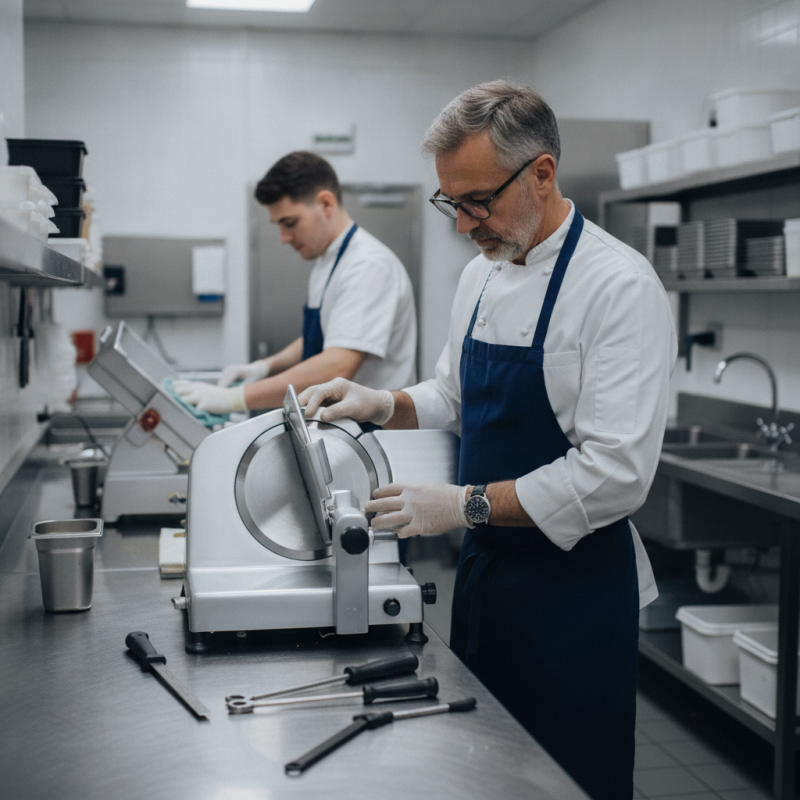
Slicing and cutting equipment comes in various shapes and sizes. Each type has a specific function that enhances efficiency in food preparation. For instance, a mandoline slicer is ideal for uniform cuts. It allows chefs to create perfect vegetable slices quickly. A chef's knife, on the other hand, is versatile. It can handle a range of tasks, from chopping herbs to dicing meats.
Understanding how to maintain each type of equipment is key to longevity and effectiveness. Regularly clean your tools to prevent cross-contamination. Disassemble slicers when necessary to reach hard-to-clean areas. Over time, dull blades can lead to safety issues and inconsistent cuts. Reflecting on your practices can reveal areas for improvement. Are you replacing dull blades promptly?
Consider the benefits of investing time in maintenance routines. Different materials require different care; stainless steel is more resistant but still needs attention. Plastic components might warp without careful handling. A little mindfulness can significantly impact your equipment's performance. Not all routines are perfect, but assessing flaws can lead to better practices.
Regular cleaning is crucial for maintaining slicing and cutting equipment. Debris and food particles can accumulate, affecting performance. It's essential to establish a routine that includes daily, weekly, and monthly cleaning tasks.
For daily upkeep, wipe down surfaces with a damp cloth after every use. This simple step helps prevent cross-contamination. Weekly, soak blades and other removable parts in warm, soapy water. This allows for a thorough clean that removes stubborn residues.
Monthly deep cleaning is often overlooked. Equipment should be disassembled as much as possible. Use a soft brush to remove buildup. Pay special attention to hidden corners where dirt can hide. This process can be time-consuming but is necessary for prolonging equipment lifespan. Remember to inspect for any wear or damage during cleaning. Neglecting this can lead to safety hazards.
Equipment may not always look dirty, but unseen grime can build up. This could lead to unpleasant odors or flavors in your food. Regular cleaning fosters a safer kitchen environment, preventing foodborne illnesses. Yet, it’s easy to fall into a routine and overlook these tasks. Set reminders or involve staff to ensure compliance. Poor cleaning habits reflect on food quality and safety, ultimately impacting customer satisfaction.
Proper sharpening techniques are crucial for maintaining slicing and cutting equipment. Regularly sharpening knives and blades increases cutting efficiency significantly. Industry statistics indicate that a sharp edge can reduce cutting force by up to 40%. This improvement not only enhances performance, but also extends the lifespan of the equipment, reducing the frequency of replacements.
Different materials require specific sharpening methods. For stainless steel, honing with ceramic rods works well. For high-carbon steel, whetstones can enhance the edge more effectively. A survey by the National Association of Culinary Professionals showed that 70% of chefs believe proper sharpening increases safety. Dull blades are more dangerous as they slip and require more force, creating potential hazards.
It's also essential to incorporate a regular maintenance schedule. Many professionals neglect this aspect, leading to uneven wear and damage. Investing time in learning various techniques pays off in both equipment longevity and cutting quality. Reflecting on personal practices can reveal areas that need attention. Up to 60% of cutting professionals report using improper techniques, impacting their workflow. Prioritizing these skills is vital for any serious endeavor in the culinary arts.
Proper storage of slicing and cutting equipment is crucial for longevity and safety. Keeping blades sharp and maintained ensures effective performance. But where and how you store these tools matters significantly. A clean, dry environment prevents rust and wear. A designated spot on a wall-mounted rack keeps knives visible and accessible. But remember, clutter can encourage accidents and might damage your tools.
Additionally, consider using protective sheaths or magnetic strips for storage. They can prevent accidental cuts and maintain sharpness. Placing tools in drawers without proper organization can cause nicks and dull edges. It’s easy to overlook small details like avoiding overcrowded spaces. This can lead to equipment that suffers from unnecessary wear and tear. Not every solution is perfect, and it’s essential to reassess your methods periodically. Regular cleaning and inspecting for signs of damage should become a habit.
Maintaining slicing and cutting equipment is crucial for efficiency and safety. Scheduling periodic maintenance checks can help ensure that your tools remain in optimal condition. Look for signs of wear and tear, such as dull blades or loose screws. Regularly inspect the equipment for any signs of rust or corrosion. Addressing these issues promptly can prevent larger problems down the line.
During maintenance, prioritize cleaning. Removing food residues prevents contamination and extends the life of the equipment. Additionally, lubricate moving parts to keep everything running smoothly. However, do not over-lubricate, as this can attract dirt and debris. Develop a checklist that outlines what to inspect during each maintenance session. This systematic approach helps maintain consistency and reliability in your operations.
Reflect on what maintenance tasks you might overlook. Sometimes, even minor issues can lead to significant problems later. Take time to review your current practices and identify areas for improvement. Being proactive is key. Encourage team members to report any irregularities immediately. This culture can help you catch issues before they escalate. Regular maintenance checks create a safe and productive environment.
: Regular cleaning prevents debris accumulation, which improves performance and maintains equipment lifespan.
Wipe down surfaces with a damp cloth after every use. This step prevents cross-contamination effectively.
Soak blades and removable parts in warm, soapy water to remove stubborn residues.
Disassemble equipment as much as possible and use a soft brush to remove buildup from hidden corners.
Equipment may look clean but hidden dirt can cause odors or flavors in food. Regular checks are essential.
Regular sharpening increases cutting efficiency and extends the lifespan of knives and blades significantly.
Use ceramic rods for stainless steel and whetstones for high-carbon steel to achieve optimal results.
Poor maintenance habits can lead to uneven wear and damage, negatively impacting cutting quality and safety.
About 60% of cutting professionals report using incorrect techniques, which can hinder efficiency and safety.
Yes, involving staff helps ensure compliance with cleaning routines and promotes better kitchen hygiene.
In order to maintain slicing and cutting equipment effectively, it is crucial to understand the various types of equipment available, as each may require specific care. Regular cleaning procedures should be followed to ensure optimal performance, including the removal of food residues and grime. Additionally, sharpening techniques are essential for enhancing cutting efficiency and prolonging the lifespan of the blades.
Safe storage practices play a significant role in preventing damage and deterioration of the equipment. It is also important to schedule periodic maintenance checks, during which users should inspect for any wear and tear, ensuring that all components are in good working condition. By following these essential tips on how to maintain slicing and cutting equipment, one can achieve better performance and longevity from their tools.
